
Shorebirds vs. Seabirds: The Quick Guide
This post contains affiliate links. If you use these links to buy something, I may earn a commission at no additional cost to you. I only recommend products I fully support or use myself. My full disclaimer
PIN THIS FOR LATER
Contents
Headed to the coast with your binoculars, but can't tell if you're looking at shorebirds or seabirds?
Short answer: shorebirds work the water's edge, wading the shallows and probing mud and sand for invertebrates, while seabirds spend most of their lives on the open sea and come ashore mainly to breed.
That should clear things up faster than a gull can steal your sandwich. Mostly.
First comes a quick explainer with some fast facts on telling the two groups apart, then a closer look at popular North American species from each.

Sanderlings zip along the surf line looking for nummies.

Quick explainer: what's the difference?
Both groups hang around water, so at first glance they can seem cut from the same cloth.
Look closer and they turn out to be quite distinct, both in where they live and in how they live. A few surprising overlaps blur the line, too.
Shorebirds: coastal wanderers, and then some
Shorebirds are a diverse group. Most prefer coastlines, mudflats, and marshes, and sometimes lakeshores and riversides too.
Do they all stick close to the coast? Nope. Many species turn up inland, in grasslands, tundra, or even deserts, during migration or breeding season.
Out on the beach, they're the ones wading in the shallows, probing the mud with specialized bills, or scurrying along the sand in search of invertebrates.
Shorebird traits to know
Coastal areas are the usual hotspots, but shorebirds adapt to a wide range of environments. The Mountain Plover, for one, breeds on dry inland prairies, far from any coastline.
Plenty of shorebirds have long, slender bills designed for probing mud and sand for worms, crustaceans, and insects. Not every species feeds that way, though. The Ruddy Turnstone flips over rocks and debris to find its meals.
They're also some of the most accomplished long-distance migrants in the bird world. Many species travel from the Arctic to South America and back, and some, like the Bar-tailed Godwit, fly nonstop for thousands of miles.

A frigatebird goes after a Brown Pelican, hoping to harass it enough that it'll give up its latest catch.
Seabirds: ocean nomads, plus a few land lovers
Seabirds are the ultimate ocean-going adventurers. They spend most of their lives on the open sea, often far from land, and their bodies are specially adapted to marine life.
Land is for breeding. They come ashore to nest, usually on remote islands, rocky cliffs, or isolated beaches that keep them safe from land predators.
Does every seabird live far out at sea? No. It's a broad category, and gulls and some species of cormorants are often seen along coastlines and even well inland.
Seabird traits to know
Their whole kit is built for the marine environment: webbed feet for swimming, salt glands to excrete excess salt, and streamlined bodies for efficient flight over water.
Albatrosses use their massive wingspans to glide over vast stretches of ocean. Puffins are expert divers that catch fish with their specialized beaks.
Most seabirds nest in large colonies on remote islands or cliffs, where they can raise their young away from most land predators. The Marbled Murrelet breaks that rule and nests far inland in old-growth forests.
Feeding strategies vary by species and setting. The Black Skimmer skims the surface of calm water for fish. The Brown Pelican goes for drama instead, with plunge dives to catch its prey.
Notable exceptions and overlaps
Some birds blur those lines anyway. Gulls are the great generalists: usually lumped in with seabirds, yet equally at home inland. These opportunistic feeders turn up anywhere from the middle of a city to remote coastal cliffs.
Cormorants are split. Some are true seabirds that spend most of their time at sea, while others, like the Double-crested Cormorant, are often found on inland lakes and rivers.
And phalaropes? These small shorebirds breed on inland wetlands, then spend the rest of the year at sea, spinning on the water's surface to create whirlpools that draw in tiny prey.

While many gull species can be found far inland, western gulls tend to stick relatively close to the coastline.
What shorebirds and seabirds have in common
Shoreline versus open ocean sounds like a clean split. Still, the two groups share some remarkable traits, and each one says something about how adaptable and resilient these birds are.
Migration: long hauls by sky and sea
Both groups are famous for long migrations that take extraordinary endurance and navigation. How they travel can differ quite a bit, though.
Shorebirds first. The Bar-tailed Godwit holds the record for the longest nonstop flight of any bird, covering more than 7,000 miles from Alaska to New Zealand in a single stretch without a break.
The Red Knot runs a marathon of its own, from the Arctic to South America, refueling at a network of stopover sites along the way.
What makes shorebird migration so remarkable? Timing. The birds have to reach each critical stopover just as its seasonal food becomes available.
Seabirds are exceptional travelers too, though their routes often cross vast stretches of open ocean. The Arctic Tern is the undisputed migration champion, traveling every year between its breeding grounds in the Arctic and its wintering areas in the Antarctic.
Shorebirds often depend on specific coastal habitats as they migrate. Seabirds like the Arctic Tern are true ocean wanderers, covering immense distances over open water.
Some, like the Sooty Shearwater, cross the equator on migrations that loop around the entire Pacific Ocean.
Adaptations: bills, beaks, and feeding tactics
Both groups evolved specialized bills and feeding habits to suit where they live, and the variety within each group is where things get interesting.
Shorebird bills come in a wide range of shapes and sizes, each matched to a feeding strategy. The American Avocet sweeps its long, upturned bill through shallow water and mud, filtering out small invertebrates.
The Ruddy Turnstone works differently, using a short, sturdy bill to flip stones, shells, and debris in search of hidden prey.
Why so many bill shapes? They let shorebirds work different niches within the same habitat, which cuts down on direct competition for food.
Seabird beaks are just as specialized for an ocean diet. The Black Skimmer has a uniquely long lower mandible that it uses to skim the surface of the water for fish, a technique almost as dramatic as it is effective.
The Brown Pelican's large bill and expandable throat pouch are perfect for plunge-diving and scooping up fish.
Albatrosses have hooked bills built for snatching fish and squid from the ocean's surface, while shearwaters use slender bills to catch prey in deeper water.

The black-legged kittiwake is one of the more petite and adorable gulls in the Laridae family.

From short and stout to long and pokey, bird bills are impressively adapted for gathering a good meal. This marbled godwit can stab its long bill well into the sand to snag mole crabs.
Overlapping niches: where shore meets sea
The two groups usually keep to their own habitats. A few birds live with a foot in each world.
Gulls and terns are the classic bridge between them. Their strong ties to marine environments usually get them classified as seabirds, yet they're just as at home inland along lakes and rivers, and even in cities.
The Ring-billed Gull is a common sight foraging in plowed fields far from the sea. The Common Tern dives for fish in fresh water and salt water alike.
Phalaropes straddle the divide too. These small, delicate birds are technically shorebirds, yet they spend much of the year at sea.
During migration they spin in tight circles on the water's surface, creating whirlpools that pull small aquatic prey within reach. It's a feeding technique more like a seabird's, even though phalaropes keep the slim, wading profile typical of shorebirds.
Cormorants complicate things further. They're often associated with coastal areas, where they dive for fish in both marine and freshwater environments.
Some, like the Double-crested Cormorant, are just as likely to turn up on inland lakes and rivers as on the coast, drying their wings in the sun after a dive, a double life that shows how adaptable both groups can be.

A red-necked phalarope in breeding plumage gives a good stretch while feeding.
Conservation challenges they share
Different lifestyles, same pressures. Both groups face many of the same conservation challenges, including habitat loss and climate change.
Shorebirds are especially vulnerable to habitat loss at critical stopover sites and breeding grounds. Coastal development, pollution, and rising sea levels all threaten the wetlands and mudflats they rely on during migration.
For a species like the Red Knot, losing a key food source, such as the horseshoe crab eggs in Delaware Bay, can have devastating effects on the population.
Seabirds have their own set of problems, especially overfishing, bycatch, and pollution. Atlantic Puffin populations have declined because of changes in fish availability linked to climate change.
Plastic in the oceans is another serious threat. Seabirds often swallow it or get tangled in it.
So where does seabird conservation focus? Usually on protecting breeding colonies, managing fisheries to reduce bycatch, and tackling pollution in marine environments.

A dowitcher enjoys searching for food in a peaceful coastal marsh.
Popular North American shorebirds
Which shorebirds are you most likely to spot on a stroll along the shore, or even far from it? Start with these.
Sandpipers
Look for the Western Sandpiper and the Semipalmated Sandpiper. These little guys are all legs and bill, perfect for a scurrying life along mudflats and beaches.
Small, quick, always moving.
Plovers
Killdeer and Piping Plover are the classic examples. Plovers are small to medium-sized, with short bills and those distinctive black bands that make them look like they're wearing tiny tuxedos.
See one dragging a wing as if it's hurt? That's the famous broken-wing act, a bit of drama that fools predators and protects the nest.
Oystercatchers
The American Oystercatcher is large, loud, and flashy, with striking black and white plumage and a bright orange beak that's hard to miss. It's the shellfish expert of the bunch and pries open mussels with ease.
Dowitchers
Two to know: the Long-billed Dowitcher and the Short-billed Dowitcher. These medium-sized birds work their impressively long bills like sewing machines, probing mudflats for food.
Watching them feed is like watching a bird version of Whack-a-Mole.
Avocets and stilts
For examples, think American Avocet and Black-necked Stilt. Avocets sweep those elegant, upturned bills through the water to catch small invertebrates.
Stilts? They live up to the name, with long, stilt-like legs that keep them high above the water.

A researcher holds a marbled murrelet after fitting it with a radio tag. Knowing where this murrelet goes to nest helps guide habitat preservation decisions.
Popular North American seabirds
Out over the waves, the cast changes. These ocean wanderers are as comfortable soaring over open water as they are nesting on remote cliffs.
Albatrosses
Meet the Black-footed Albatross and the Laysan Albatross. Their massive wingspans let them glide over the ocean for hours without flapping.
They're long-distance champions too, making epic migrations across the Pacific.
Puffins
The Atlantic Puffin and the Horned Puffin, with their colorful beaks and clown-like faces, are the comedians of the seabird crowd.
Don't let the looks fool you. Puffins are skilled divers that catch fish with surprising speed and agility.
Gannets
The Northern Gannet is the daredevil of the sea. This large, striking bird plunges into the ocean from great heights to catch fish, and its white plumage and black-tipped wings make it easy to spot as it dives with precision.
Marbled Murrelet
A small, chunky seabird with cryptic plumage that makes it hard to spot on land.
What sets it apart? It breaks the seabird mold by nesting in old-growth forests far inland, a unique trait among its ocean-loving kin.
Gulls
Ring-billed Gulls and Herring Gulls are the opportunists. You'll see them hanging out at beaches, piers, or anywhere else they can scavenge a meal.
Stout bodies and long wings make them versatile.
Terns
Common Terns and Least Terns are the acrobats: sleek, with forked tails and sharp beaks. Their graceful dives and incredible aerial agility make them a delight to watch.
Pelicans
The Brown Pelican and the American White Pelican are large and unmistakable, best known for long beaks and throat pouches that are perfect for scooping up fish.
Look for Brown Pelicans gliding low over the waves or making dramatic dives into the water.
Cormorants
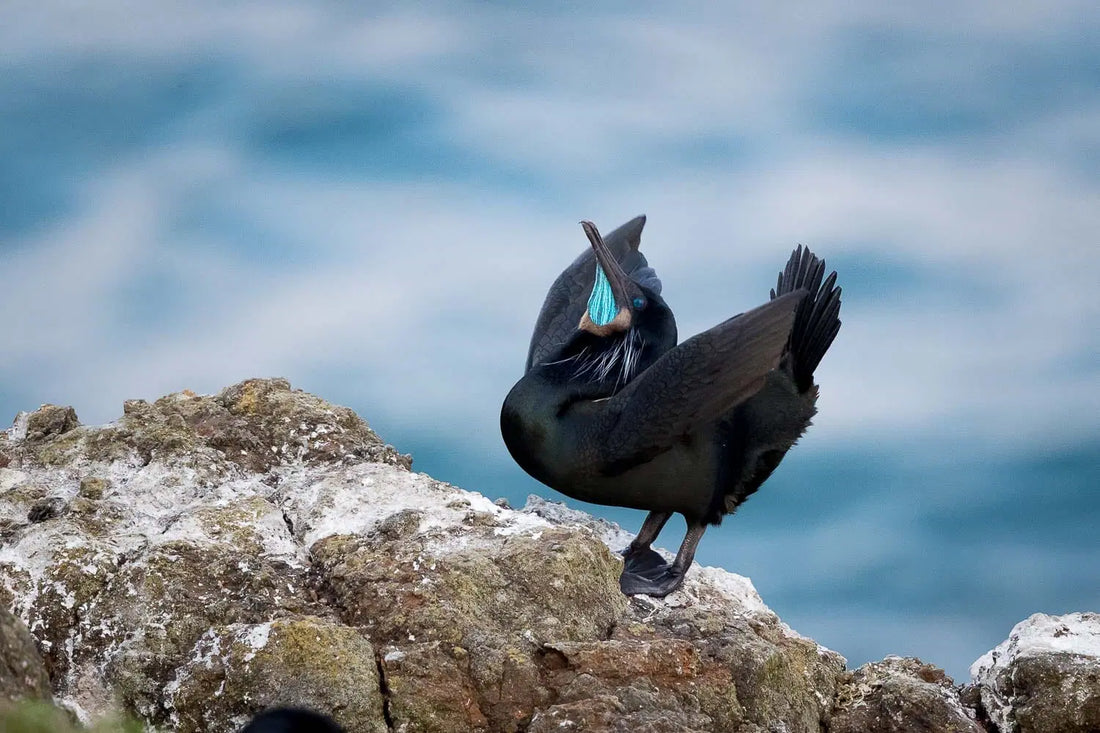
The Double-crested Cormorant and Brandt's Cormorant are medium-sized, dark-plumed birds with long necks and a habit of drying their wings in the sun after a dive.
They're built for underwater hunting and chase fish with powerful legs.
From the BWB shop, for the curious birder


🌊 Love seabirds? Browse the Seabirds collection for original Cormorant, Atlantic Puffin, and other coastal-bird designs on shirts and sweatshirts.
Free tool from Better With Birds: Heading to the coast? My free printable bird journal template has daily entries, sketch pages, and a life list.