
Plants for Birds in New Hampshire
Native New Hampshire plants that genuinely support the birds you want in your yard.

New Hampshire packs four forest zones into a small state, from the White Mountain spruce-fir summits down through northern hardwoods to oak-pine and the salt marshes of a tiny coastline. Purple Finches, the state bird, visit feeders. Bicknell's Thrush sings in the highest mountain firs. And every spring, the Connecticut River and the Lakes Region pull in migrants by the thousands.
Native New Hampshire plants do work that lawn grass and big-box ornamentals can't. They host the caterpillars and insects that 96% of New Hampshire songbirds rely on to feed their chicks. White pines, sugar maples, blueberries, and the wildflowers of the understory built the state's forests, and the birds that depend on them still do.
Enter your New Hampshire ZIP code in the tool below. The planner will filter every plant in my database to the ones genuinely native to your part of New Hampshire (White Mountains, Lakes Region, Merrimack Valley, or seacoast) and useful for the birds you actually want. Pick the species (chickadees, Purple Finches, Ruby-throated Hummingbirds, or all of them) and I'll give you a plant list that does the work.
Native New Hampshire plants that genuinely support birds
A few of the most useful native New Hampshire plants for birds:
- Eastern White Pine (Pinus strobus): New Hampshire's state tree. Cover for chickadees and kinglets; seeds for nuthatches.
- Sugar Maple (Acer saccharum): Hosts hundreds of caterpillar species; cavity nests for chickadees as it matures.
- Paper Birch (Betula papyrifera): Hosts hundreds of caterpillars; seeds for redpolls, siskins, and finches in winter.
- Northern Red Oak (Quercus rubra): Hosts hundreds of caterpillars; acorns feed jays, woodpeckers, and turkeys.
- Highbush Blueberry (Vaccinium corymbosum): Summer fruit for thrushes, Catbirds, waxwings.
- Eastern Hemlock (Tsuga canadensis): Winter cover for Golden-crowned Kinglets and Hermit Thrushes.
- Witch Hazel (Hamamelis virginiana): Late-fall yellow blooms; seeds for finches and sparrows in winter.
- Spicebush (Lindera benzoin): Red autumn berries for migrating Wood Thrushes and Veeries.
- Wild Bergamot (Monarda fistulosa): Magnet for Ruby-throated Hummingbirds in summer.
- Cardinal Flower (Lobelia cardinalis): A favorite hummingbird flower along streams and seeps.
- New England Aster (Symphyotrichum novae-angliae): Late-fall pollinator nectar; seed heads feed finches.
- American Mountain Ash (Sorbus americana): Red autumn fruit pulled in by waxwings, robins, and grosbeaks at higher elevations.
What's your ZIP code?
I'll show you native plants that are genuinely native to your area and rank them by which birds they support.
Free. No email. I'll filter every plant in the database to those actually native to your state and suited to your USDA zone.
Building your plant list…
Better With Birds
Shop the birds you love
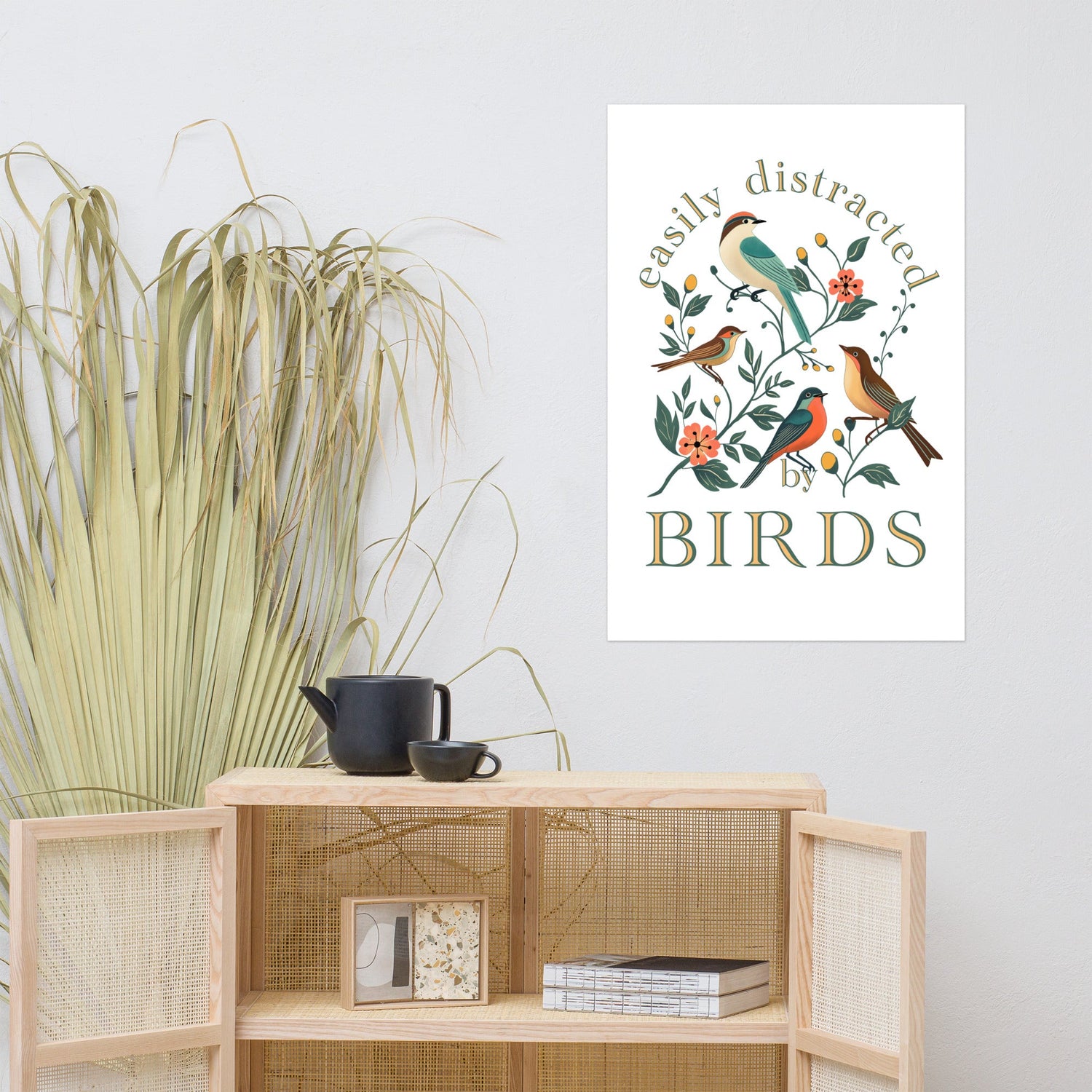
If you're already this excited about New Hampshire birds, you're going to like the apparel, prints, and stickers I've designed around them.
Purple Finches, Black-capped Chickadees, Cedar Waxwings, Ruby-throated Hummingbirds, all designed by Jaymi at Better With Birds. Made-to-order, never mass-printed.


