


Understanding Field Guides: How to Read Bird Guides for Beginners

This post contains affiliate links. If you use these links to buy something, I may earn a commission at no additional cost to you. I only recommend products I fully support or use myself. My full terms
PIN THIS FOR LATER
Contents
Joining the bird nerds? Welcome to the club. Around here, "warbler neck" is a badge of honor and "little brown jobs" (LBJs) are a challenge we happily take on.
Experienced birders seem to identify every chirp and feather with the ease of a seasoned twitcher. How? The secret starts with mastering the field guide.
Learn how yours works and you'll identify birds faster, moving from "obvious dude" to "seasoned twitcher" in no time.

Choosing the right field guide
Field guides come in three main types: traditional books, digital guides, and mobile apps. Each has its own perks and pitfalls.
Books are the classic. Nothing beats the feel of flipping through pages of illustrations and detailed descriptions, and book guides are packed with info, though they can be bulky.
Like to disconnect when you're out in nature? Then a physical guide might be your best bet.
Digital guides keep your birding info a click away. They offer searchable databases and hyperlinked content, so finding the species you're looking for is easy, and they usually run on tablets, smartphones, laptops, and e-readers.
Mobile apps put a guide in your pocket, with interactive features like audio bird calls, GPS, and real-time sighting logs, and some even use photo recognition to identify species on the fly.
The downside? Apps are super convenient, but some suffer from slow interfaces or limited illustrations for certain species.
The Merlin Bird ID app is an excellent ID tool, especially for beginners and intermediate birders, because it asks a few simple questions and then shows accurate photos and descriptions of the likely species.

Figuring out what bird you’re looking at isn’t easy when you’re first getting started. But field guides are the key to get you from “little brown job” to “male white-crowned sparrow”. Photo: Jaymi Heimbuch
Field guide factors to consider
- Region: Make sure the guide covers your local area. A North American guide won't be much help if you're birding in Europe, so pick one that includes all the birds likely to turn up in your specific area or region.
- Level of detail: Beginners might prefer simpler guides. Experienced birders may want comprehensive resources.
- Illustrations vs. photos: Some guides use detailed illustrations and others use real photographs. More on that later.
Popular field guides for beginning birders
A few good ones to start with:
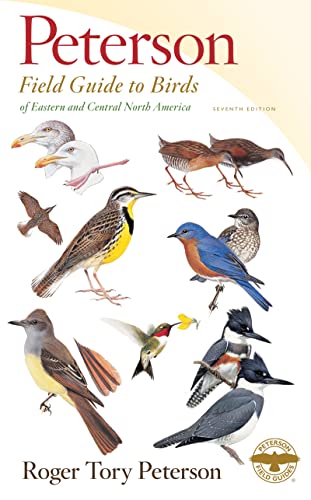
- The Sibley Guide to Birds: A comprehensive guide suitable for birders at all levels.
- National Audubon Society Birds of North America: Another excellent choice with a wealth of information.
- The Stokes Field Guide to the Birds of North America: Perfect for beginning birders, with simple layouts and concise descriptions for easy bird identification.
 |
 |
 |
 |
 |
|
|
|
|
|
|
Understanding the layout of a field guide
Bird field guides group birds by type, so you can flip straight to the right section. Raptors get a section. So do shorebirds, warblers, and so on.
Because similar species sit together, you can quickly narrow the possibilities by the bird's size, shape, and habitat, which makes the whole ID process more intuitive and a lot less overwhelming.
Index
The index is your quick reference tool, especially handy when you need a specific bird or section fast.
Never been much of an index-flipping type? You probably will be. It tends to become the most used section in the guide.
Species accounts
Each species account is a mini dossier on one bird. A typical one covers:
- Common and scientific names: Every bird gets a fancy Latin name, and it does more than impress your friends. Common names often differ from region to region, and some species even share a common name. Confusing, fast! The Latin name keeps your ID precise, both in your notes and when you share it with others.
- Description: Key features and field marks.
- Range: Where you're likely to find the bird.
- Habitat: Preferred environments, which helps you weed out species you aren't likely to find in a certain type of habitat.
- Behavior: Notable behaviors and traits.
- Illustrations or photos: Visual aids to help with identification.

Using a field guide starts with the big picture: size, shape, and habitat. From there, the details get you from type of bird (a small duck-like thing swimming in fresh water) to specific species (a female hooded merganser). Photo: Jaymi Heimbuch
Identifying birds using field guides
Identifying birds can feel like solving a mystery, and your field guide is how you crack the case (most guides even include a walk-through of the process in their intro).
Gather the right information
Plenty of species look or act alike. For a solid match, pay attention to the following.
Key features
- Size and shape: Compare the bird's size to common birds you already know.
- Color and markings: Note the color of the feathers, beak, legs, and any distinctive markings.
- Behavior: What is the bird doing? Perching, feeding, flying?
- Habitat: Consider where you are. Is it a forest, a wetland, or your backyard?
Behavioral descriptions
- Foraging: How and where the bird looks for food.
- Perching: How the bird sits on branches or other structures.
- Flight patterns: How the bird flies, whether straight, fluttering, or soaring.
Field marks
Field marks are a bird's unique identifiers, so watch them closely. Some examples:
- Beak shape: Different shapes for different diets.
- Wing bars: Stripes on the wings that can be a giveaway.
- Eye rings: Circles around the eyes, often distinctive.
- Tail shape: The way the tail feathers are arranged and their length.
Get to the right page
You've spotted a bird and jotted down its key features. Now open the field guide and nail that ID.
-
Review your notes:
- Quickly glance over the characteristics you noted: size, shape, color, markings, behavior, and habitat.
-
Flip to the quick reference section:
- Most field guides have a quick reference section grouped by bird type, color, or habitat. Start here to narrow down your options.
-
Find the right section:
- Based on your observations, flip to the relevant section. Noted a small, brown bird? Head to the section on "little brown jobs" (LBJs). J/K. If your bird is sparrow-like, try the sparrow sections first. Colorful, small, and super-flitty in a tree canopy? Try the warbler section first.
-
Compare size and shape:
- Once you've flipped to the likely section, scan the illustrations or photos for a match. Match the size and shape of your bird with the birds in the guide. Is it a small, round bird or a long, slender one?
-
Match the color and markings:
- Focus on the bird's color and any distinctive markings you noted, such as wing bars, eye rings, or streaks. Narrow down to birds with similar patterns.
-
Check behavior notes:
- Read the descriptions for behavior. Does the behavior in the guide match what you observed? That can help confirm your ID.
-
Use range maps for confirmation:
- Look at the range maps. Can the bird you have in mind be found in your area during the current season?
-
Cross-reference similar species:
- If you find a close match, check the guide for similar species that might look almost identical. Read through their descriptions to spot subtle differences.
-
Verify with multiple views:
- Some birds are shown from different angles or in different plumages (male, female, immature). Compare all views before you settle on a positive ID.
-
Consult additional guides if needed:
- Still unsure? Check another field guide or a birding app. Cross-referencing can clear up any lingering doubts.
-
Make your final ID:
- Once you've gone through these steps, make your final identification and note it down. Maybe give yourself a pat on the back, too. You're becoming a birding pro!
Work through these steps in order and you'll move through the guide methodically, which raises your chances of accurately identifying that mystery bird.

Sometimes you only get a glance at the bird, without much detail. And sometimes that’s enough, like with this very distinct New Zealand fantail. But, sometimes you need to make extra sure you’re IDing the right species. That’s where things like seasonal movements and range maps come in handy. Photo: Jaymi Heimbuch
Confirm your ID with these extra bits of info
Seasonal variations
Birds change their plumage, behavior, and location with the seasons.
Does your field guide show different summer and winter plumage for a species? Use it. That tells you what to look for in the season you're birding in.
Illustrations vs. photos
Illustrations are often more useful than photographs, since an artist can show the crucial field marks consistently and emphasize exactly the features you need to see to identify a bird.
Photos give you a realistic picture, which is great for seeing what a bird looks like in real life. Lighting, angle, and posture vary, though, so a photo might not always highlight the key ID features.
How range maps work
Is that "very rare bird" really out of place, or just taking a detour? Range maps help you figure it out. They highlight where a species is expected to be, and when.
- Year-round range: Where the bird lives all year.
- Breeding range: Where the bird goes to breed.
- Winter range: Where the bird heads for winter.
- Migration range: The path the bird takes during migration.
Using range maps effectively
- Match maps to location: Make sure the bird you're looking at is supposed to be where you are. That doesn't rule out a species that "shouldn't" be there, since there are always vagrants. It does help narrow down the likely candidates.
- Seasonal considerations: A bird's range can change with the seasons. Check the time of year.
- Local guides: Guides tailored to your area will have more accurate range maps.

Never give up the joy of actually watching birds just to identify the species right then. You’ll miss out on super cool behaviors, like watching an American dipper swim around for food. Take good notes, enjoy the moment, and look it up later. Photo: Jaymi Heimbuch
Tips for using your field guide in real time
Using a field guide well can make or break your birding experience.
Ever panicked to ID a bird before it flew away, flipping frantically through pages? Not ideal. These habits make IDing in the field a lot more enjoyable.
-
Observe first, reference later
Before reaching for your field guide, take a moment to watch the bird. Notice the key details (size, color, markings, behavior, and habitat) and jot them down quickly if you can. The more you observe, the easier the ID gets later. So just watch for a while, because the longer you watch, the more meaningful (and potentially critical) ID markers you'll notice.
-
Use quick reference sections
Once you've enjoyed the watching part, and while the bird is still sharp in your memory, flip open your guide. Many field guides have quick reference sections at the front or back that group birds by color, shape, or habitat. Noted the bird's primary color or a distinctive feature? Flip to those sections first to narrow down your options.
-
Match key features
Start matching the features you observed with the descriptions and illustrations in the guide, one key identifier at a time.

The details matter. This red crossbill could be mistaken for a house finch or purple finch. But if you notice size, plumage patterns, and of course that amazing bill shape, it’s a cinch to pin down its true identity. Photo: Jaymi Heimbuch
Practical tips for speedy and efficient field guide use
-
Bookmark key sections
Sticky notes or bookmarks on the sections you reference most save time when you need to flip there quickly.
-
Understand the layout
Get familiar with your guide's layout before heading out. Where are the range maps, field marks, and descriptions? Knowing that can save precious time in the field.
-
Compare multiple views
Many field guides include several illustrations or photos of the same species (male, female, juvenile, in flight, perched). Compare all of them so you don't mistake a juvenile or female bird for a different species.
-
Use range maps for confirmation
After matching physical features, use the range maps to confirm that the bird could realistically be where you're seeing it, and check that it's within its expected range for the current season.
-
Focus on field marks
Field marks are the distinctive features that set one species apart from another, so pay special attention to them when you match a bird in your guide. Look at the markings on the wings, head, and tail, plus the overall coloration.
-
Cross-reference similar species
Found a bird that matches closely but not perfectly? Check similar species in the guide. Many guides group similar species together and point out the subtle differences.
-
Stay organized with notes
Take detailed notes on your observations, including time, weather, location, and specific features of the bird, then cross-reference them with the guide to confirm your ID. Many birders keep physical records and write down lifers in their guides. So despite what your elementary school librarian told you, don't be afraid to scribble in the margins.
-
Be patient and methodical
It's easy to get excited when you spot a bird, but taking your time leads to more accurate identifications. Work through the guide methodically, checking off each identifying feature.

Learning to use field guides will help you quickly pick out who is who, even in a mixed flock of migrating geese, like these snow geese and greater white-fronted geese. Photo: Jaymi Heimbuch
Advanced ID techniques for experienced birders
-
Memorize common species
Know the common birds in your area well enough to rule them out quickly. Then you can focus on the unusual species without getting bogged down.
-
Use multiple guides
No single guide is perfect. Bring a second guide or use a digital app to cross-reference and confirm IDs, which helps most with tricky IDs and rare birds.
-
Learn bird calls
Many birds are easier to identify by their calls than by sight. Use apps or audio guides to learn common calls and match them to the species in your field guide.
-
Sketch your observations
Artistically inclined? Sketch the bird you're watching. It helps cement features in your memory and gives you a visual reference to compare with your guide later.
-
Get a reference photo
A quick image of the bird helps you check specific field marks later. Don't worry, you're not trying to get into the pages of National Geographic. Even a somewhat blurry photo can be a useful reference when you check your field guide.
-
Engage with other birders
Share your findings and talk through identifications with other birders. They might have insights or experience with particular birds that you lack.
-
Combine multiple field guides
Mixing and matching field guides is wise. Each brings its own strengths, and together they make your IDs faster and more accurate. No guide is perfect, so combining them gives you the best of what's out there.

Avoid having “womp woooomp” moments while using field guides. Double-check your IDs, pay attention to details, and, as with everything, have patience. (North Island Robin) Photo: Jaymi Heimbuch
Common mistakes and how to avoid them
Everyone makes mistakes. These are the most common ones in birdwatching, and how to avoid them.
Misidentification
It's easy to get excited and jump to conclusions when you spot a bird. Before you shout "rare bird!" to the heavens, double-check your ID.
Look at the bird, then at your guide, and make sure the key features match up: size, color, and markings. That keeps you from confusing one species with another.
Ask other birders, too. Birders are a friendly bunch, and there's no shame in a second opinion. In the field or in a photo you share online, experienced birders can offer insight and might notice details you missed.
Still not sure? Use multiple guides. No single guide is perfect, and each has strengths and weaknesses, so cross-reference books, apps, and websites to confirm your identification.
Overlooking common species
Before you chase after those extremely good ticks, get to know your local, common species, because familiarity with common birds sharpens your identification skills and builds a solid foundation.
Can you name the everyday visitors to your backyard? Then something unusual gets much easier to spot.
Don't dismiss the ordinary. Common birds can be fascinating too, and studying their behavior and variations teaches you a lot about bird identification and ecology. Plus, every birder needs to know their sparrows from their finches, glamorous or not.
Getting discouraged
Birding is a long game. It takes time and practice to get good, and even the most experienced birders were once beginners who struggled to identify species. So be patient. Every outing is a chance to learn.
And enjoy the process. Being in nature and watching wildlife is the joy of it, and ticking rare birds off a list is only one part of the experience. The more you enjoy it, the more motivated you'll be to keep learning and improving.

After a little while, you’ll notice that you lean on your field guide less and less while birding locally. Soon, that Townsend’s warbler on the tree in your yard is as distinct and instantly obvious to you as any family member. Photo: Jaymi Heimbuch
Final tips for success
Sometimes you'll hear a bird before you see it. Learning to recognize bird calls can help you identify species without needing a visual confirmation, and there are apps and online resources that make learning bird songs fun and interactive.
Stay organized. Keep a birding journal or use an app to document your sightings. Note the date, location, weather, and behavior of the birds you see. Over time, those records help you spot patterns and improve your identification skills.
Gear helps too. A reliable pair of binoculars and a portable field guide can make a huge difference in the field. Quality binoculars will help you see those crucial details more clearly.
Some locations are birding goldmines. Get to know your local hotspots and you'll see a wider variety of species and more rare birds. You'll often run into other birders there, too, who can share tips and sightings.
Want company? Join a birding group, in person or online. Groups can be incredibly supportive, with a wealth of knowledge and camaraderie, and they often organize group outings that build your skills and make birding more fun.
A field guide is packed with the info you need to identify, understand, and appreciate the birds around you. Of course, it doesn't replace real life observation.
So grab a notepad and your 'nocs. Then head outside to practice.
Welcome to the bird nerds, and if you'd like to make it official, my Bird Nerd tees and hats are in the shop.
Free tool from Better With Birds: Enter your ZIP and see which birds are likely at your feeder this month. It's based on public bird-occurrence records. Free, no email.
Shopping for a birder who already owns every field guide? The gifts for birders collection has bird-themed shirts, mugs, and home goods to round out the field kit.